

Fashion School Portfolio Preparation: Checklist, Examples and Admissions Advice

JCA London Fashion Academy • September 18, 2026

Quick Answer

Portfolio preparation fashion school means building a focused body of creative work that shows research, experimentation, technical skill, and personal point of view. The best portfolios are not just polished final images; they explain how you think, how you develop ideas, and why your work belongs in a fashion course.

Portfolio preparation fashion school is where many applicants feel stuck, but it does not have to be overwhelming. A strong portfolio is simply clear evidence of your creative thinking, your drawing or making skills, and your ability to develop an idea from first spark to final outcome. That matters whether you are applying for a Foundation Diploma, a BA, or an MA, because tutors are looking for potential, not perfection. If you are unsure where to begin, start by learning how admissions teams assess progression, originality, and motivation, then build from there. You can also explore JCA’s pre-application form if you want direct guidance before you submit. This article gives you a practical checklist, examples of what to include, mistakes to avoid, and interview advice. It is designed to help nervous applicants feel more confident and make portfolio preparation fashion school feel structured, creative, and achievable.

What Is a Fashion School Portfolio?

A fashion school portfolio is a curated presentation of your creative process, technical ability, and personal style. In portfolio preparation fashion school, the goal is not to show only finished garments. It is to prove how you research, experiment, edit, and communicate ideas.

Think of it as your visual application story. Tutors want to see what inspires you, how you observe fashion and culture, and how you turn sketches or samples into resolved work. For a broader view of study routes, you can also review fashion design courses in London and compare how different programmes expect different levels of readiness.

A strong portfolio usually includes a mix of sketchbook pages, mood boards, fabric tests, garment studies, final designs, and reflective notes. However, the exact balance depends on the course level. Foundation applicants may show more raw exploration. BA applicants usually need stronger technical development. MA applicants should show clear independent thinking and a mature point of view.

For context on the wider educational landscape, the UK government guide to applying for higher education explains the general application route for students entering higher education. Meanwhile, the fashion design overview on Wikipedia is useful for understanding the discipline’s broad creative and commercial scope.

Portfolio preparation fashion school works best when you treat it like a process, not a one-off task. Start early. Save your experiments. Photograph your work well. Most importantly, choose pieces that show learning, not just finished beauty. Admissions teams often value curiosity because it signals teachability and long-term potential.

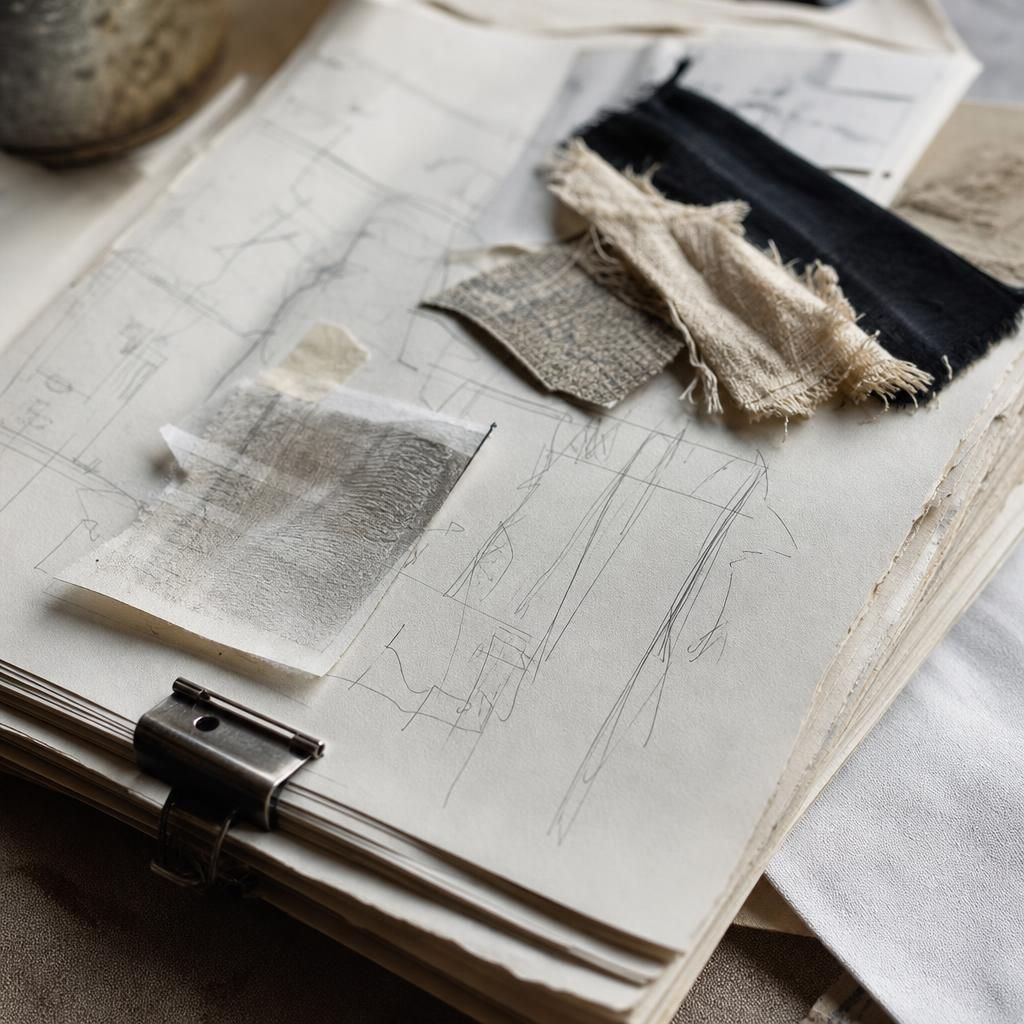
Sketchbook pages, fabric swatches, and taped paper samples 

How does a fashion portfolio differ from an art portfolio?

A fashion portfolio is usually more process-driven and outcome-focused than a general art portfolio. It should show how ideas become garments, accessories, branding concepts, or fashion communication outcomes. That means sketching, draping, fabrication, styling, or visual storytelling often matter as much as final presentation.

What Admissions Tutors Look For in portfolio preparation fashion school

Admissions tutors look for evidence that you can think creatively and develop ideas with purpose. In portfolio preparation fashion school, the strongest work usually shows range, consistency, and an honest sense of curiosity.

They are not expecting industry-level perfection. Instead, they want to see how you observe, test, and improve. A portfolio that shows mistakes and revisions can be more convincing than one that only shows polished outcomes. That is because development reveals how you learn.

Tutors also look for a clear visual voice. Your work does not need to look like anyone else’s. In fact, originality is often stronger when it feels specific to your interests, your influences, and your perspective on fashion.

If you want a deeper admissions perspective, JCA Academy’s admissions and student-life information is a helpful starting point. It shows how a boutique fashion academy frames progression, mentoring, and course fit. You can also explore JCA’s fashion portfolio course if you want structured help before applying.

A useful way to think about portfolio preparation fashion school is to ask one question: does this page show talent, or does it show thinking? The best portfolios usually do both.

Research and inspiration

Strong research pages show that you can gather, select, and interpret visual references. Include images from art, architecture, nature, film, subcultures, or heritage craft if they genuinely inform your idea. Add brief notes so tutors can follow your thinking.

Sketchbook development

Sketchbooks matter because they reveal how you work day to day. Include figure studies, garment ideas, silhouette exploration, and annotation. Rough pages are valuable when they show momentum, confidence, and idea-building.

Experimentation and process

Process pages should show tests, not just answers. This might include fabric manipulation, print trials, pattern studies, collage, draping, or digital experiments. These pages make portfolio preparation fashion school feel believable and dynamic.

Finished fashion outcomes

Include your strongest outcomes, but keep them selected. One or two strong final looks often communicate more than too many average pieces. Show clear photography, front and back views if relevant, and short captions that explain the concept.

Personal voice and originality

Originality is not about being strange for its own sake. It is about making choices that feel connected to you. Tutors notice when a portfolio has a clear visual point of view and a consistent creative thread.

Fashion Portfolio Checklist for portfolio preparation fashion school

A checklist helps you stay focused and avoid last-minute panic. In portfolio preparation fashion school, clarity always helps more than quantity.

Use this as a practical starting point:
- Research pages with clear themes
- Mood boards that reflect your concept
- Sketches showing figure, silhouette, or garment ideas
- Annotation that explains decisions
- Fabric, colour, or material samples
- Pattern, drape, or construction experiments
- Final design outcomes or finished garments
- Photographs of garments on a body or mannequin
- Personal reflection on what worked and what changed
- A short introduction to who you are as a designer

If you are applying to a course with a stronger making focus, include construction evidence. If you are interested in branding or communication, include styling boards, visuals, or campaign ideas. For applicants comparing study routes, the full-time courses page gives a useful overview of what different programmes are designed to develop.

Portfolio preparation fashion school also means presentation matters. Keep your pages neat and readable. Use a consistent format. Label work clearly. If you submit digital files, make sure images are sharp and cropped well. If you submit printed pages, use high-quality scans or photos.

A final tip: remove anything that weakens the story. Good editing is part of creative judgement. A smaller, stronger portfolio usually feels more confident than a large, unfocused one.

What should a beginner include?

Beginners should include sketchbooks, observational drawings, simple design ideas, and experiments with colour or texture. Strong beginners’ portfolios often show enthusiasm and discipline, even if the technical work is still developing.

Portfolio Examples: What to Include in portfolio preparation fashion school

Good portfolio examples are not copy-paste templates. They are evidence of range, progression, and decision-making. In portfolio preparation fashion school, a strong example sequence might move from inspiration to experiments, then to resolved outcomes.

Here are useful portfolio examples to build around:
- A concept inspired by a cultural theme, with research and mood development
- A garment exploration showing silhouette testing and fabric manipulation
- A collection page with 3 to 6 coordinated looks
- A fashion communication project with styling, imagery, or brand direction
- An accessories concept with material tests and function notes
- A reflective page explaining what you learned from a project

If you want to see how a successful portfolio can be structured in practice, this walkthrough by New York Art Studio is a useful reference:

. It can help you understand how an applicant presents process, final work, and personal voice in one narrative.

For applicants who want to specialise in luxury craft, tailoring, or accessories, portfolio preparation fashion school should show precision as well as imagination. That is why it helps to include close-up detail shots. Texture, finishing, and proportion matter.

You can also explore the Foundation Diploma in Fashion if you are building from school level, or the MA fashion entrepreneurship route if your work is more strategic and brand-led. Different programmes want different evidence, so your examples should match your target course.

What a strong page looks like

A strong page has one clear idea, one visible development stage, and one reason to care. It should not feel crowded. Tutors need to understand the concept quickly, then notice the quality of your thinking.

How many final pieces should you show?

Show enough to prove range, but not so many that the work becomes diluted. Often, a few carefully selected projects with clear development are more persuasive than a long sequence of repetitive pages.

Common Mistakes in portfolio preparation fashion school

Most portfolio mistakes come from trying too hard to impress. In portfolio preparation fashion school, clarity beats decoration every time.

Common mistakes include:
- Showing only final images with no process
- Including too much work with no clear theme
- Copying trends instead of showing personal interests
- Using poor photography or blurry scans
- Writing too much text and too little visual evidence
- Ignoring the target course level
- Leaving no space for reflection or development

Another common problem is inconsistency. A portfolio can feel disconnected when each page looks unrelated. Instead, try to create a visual rhythm. This does not mean every page must look identical. It means the portfolio should feel deliberate.

One more issue is under-sharing. Nervous applicants often hide early sketches or experiments. However, those pages can be the most useful. They prove you are willing to explore. That is especially important in a creative subject.

If you want more guidance before applying, JCA’s fashion portfolio feedback page is a strong next step. It supports applicants who want clearer direction before sending materials. Portfolio preparation fashion school becomes much easier when someone experienced helps you see what is working and what needs refinement.

How can you tell if a portfolio is too weak?

A portfolio feels weak when it has no development, no reflection, or no clear connection to the course. If it reads like a random folder of images, it needs restructuring before you apply.

How to Prepare for a Fashion School Interview

A fashion school interview should feel like a conversation about your creative direction. In portfolio preparation fashion school, your interview is where you explain why your work matters.

Be ready to talk about your influences, your creative process, and the choices behind your portfolio. Tutors may ask why you selected certain projects, what you learned, and which designers, artists, or cultural references shaped your thinking. They may also ask what you want to improve.

A good interview answer is honest and specific. Instead of saying you like fashion in general, explain what part of fashion interests you most. That could be design, branding, accessories, communication, or business strategy.

Before your interview, review your portfolio carefully. Know the story behind each project. Practice describing your work in simple language. Also prepare one or two thoughtful questions about the course.

For an example of detailed portfolio advice from the wider fashion education world, this Method 4 Fashion guide is useful:

. It walks through what top fashion schools often expect and can help you prepare talking points for interview discussion.

If you are interested in a London-based creative environment, you can also learn more about studying in Mayfair, where location, industry proximity, and small-group teaching can support interview confidence. Portfolio preparation fashion school is not only about images. It is also about showing that you understand your ambitions and can discuss them clearly.

What questions should you expect?

Expect questions about inspiration, favourite projects, practical skills, and future goals. You may also be asked why you chose that institution and how your portfolio reflects your interest in the subject.

Portfolio Advice for Foundation, BA and MA Applicants

The right portfolio depends on the level you are applying for. In portfolio preparation fashion school, matching your evidence to the course is one of the smartest things you can do.

Foundation applicants should show enthusiasm, curiosity, and willingness to learn. Include sketchbooks, visual research, basic design development, and early making or drawing skills. The aim is to show potential.

BA applicants need stronger development and more evidence of independent thought. Include clearer themes, more confident experimentation, and a few resolved outcomes. If you are applying for a design-focused degree, your work should show technical growth and creative direction.

MA applicants should bring a mature, self-led body of work. The portfolio should show depth, critical thinking, and a clear reason for postgraduate study. If your interest is entrepreneurship, strategy, or innovation, make that visible through brand thinking, product logic, or communication outcomes.

Applicants who want a practical route can review JCA short courses or fashion short courses in London to build skills before a formal application. That can be especially helpful for career changers or international learners who want a smoother transition.

Portfolio preparation fashion school should always reflect your current level and next step. Tutors are not looking for the same thing from everyone. They want to see readiness for the stage you are entering.

How should international applicants approach it?

International applicants should focus on clear presentation, concise explanations, and course fit. If English is not your first language, write simple notes and make sure your portfolio story is easy to follow.

What about career changers?

Career changers should frame prior experience as a strength. Skills from business, communication, styling, or making can support your application if you connect them to fashion clearly.

Get Pre-Application Support from JCA

Pre-application guidance can save you time and reduce stress. In portfolio preparation fashion school, a short review before you submit can make a major difference to structure, confidence, and course fit.

JCA London Fashion Academy supports applicants who want practical admissions advice before applying. If you are unsure whether your portfolio is ready, start with the pre-application form. You can also explore Fashion Academy London at JCA to understand the academy’s creative and entrepreneurial approach.

This matters because a strong application is not only about presenting beautiful pages. It is about showing that your ambitions match the course you want. If you are drawn to design, branding, accessories, communication, or fashion management, JCA offers pathways that can align with different creative goals.

Portfolio preparation fashion school becomes much easier when you have direction. A tutor, adviser, or admissions contact can help you spot gaps early. They can also help you decide whether you need more research, more making, or simply better editing.

If you are ready to move from uncertainty to action, begin the conversation now. Ask for feedback, request the prospectus, or explore the full-time study route that suits your next step. The best time to improve your portfolio is before you apply, not after. That is how applicants turn good ideas into strong admissions outcomes.

When should you ask for help?

Ask for help as soon as you have a rough portfolio draft. Early feedback is more useful than last-minute checking, because it gives you time to improve the work properly.

Key Takeaways

  • Portfolio preparation fashion school is about showing process, originality, and potential, not just polished final images.
  • Tutors want to see research, development, experimentation, and a clear personal voice.
  • A strong checklist helps applicants match their portfolio to the right course level, from Foundation to MA.
  • Common mistakes include weak editing, missing process work, and portfolios that do not fit the course.
  • Early pre-application support can improve structure, confidence, and admissions readiness.

Frequently Asked Questions

What should I include in a fashion school portfolio?

Include research, sketchbook pages, development work, experiments, and a few strong final outcomes. In portfolio preparation fashion school, tutors want to see how you think, not just what you have finished.

How many pieces should a fashion portfolio have?

There is no single perfect number. Focus on quality, relevance, and progression, because portfolio preparation fashion school is assessed more on insight and development than on volume alone.

Do I need finished garments in my portfolio?

Not always. Finished garments help, but they are not the only evidence that matters. Strong process pages, drawings, samples, and reflective notes can be just as important in portfolio preparation fashion school.

How do I make my fashion portfolio stand out?

Show a clear point of view and strong development. In portfolio preparation fashion school, the portfolios that stand out usually combine originality, editing, and a story that feels genuinely personal.

Can I get feedback before I apply?

Yes, and it is a smart move. Early feedback can help you improve your structure, strengthen weak pages, and match your portfolio more closely to the course you want.

Fashion Clearing Courses London 2025: Late UCAS Applications
By JCA London Fashion Academy September 17, 2026
If you are looking for fashion clearing courses in London, timing matters as much as talent. Clearing is often the moment when a strong portfolio, a clear creative direction, and a fast application can open the door to your next course. That is especially true for applicants who want hands-on fashion education, a more personalised academy experience, or support before they submit. JCA London Fashion Academy offers a focused route for students exploring fashion clearing courses alongside…

Fashion Design Course London – BA & Foundation Options at JCA
By JCA London Fashion Academy September 16, 2026
Choosing a fashion design course London is about more than location. It is about finding a programme that gives you real studio time, clear technical progression, and the confidence to shape a label of your own. At JCA London Fashion Academy, that means learning in a creative environment where design, branding, and entrepreneurship work together from the start. If you want to explore routes in more detail, the full-time courses at JCA show how foundation, degree, and advanced study can…
Jimmy Choo Academy: Fashion Education at JCA London Fashion Academy
By JCA London Fashion Academy September 15, 2026
Jimmy Choo academy is the search phrase many future designers use when they want to find JCA London Fashion Academy. It points to a creative, London-based fashion school associated with Professor Jimmy Choo OBE, and it appeals to students who want more than sketchbooks and catwalk dreams. They want real fashion education, brand thinking, and practical skills that can support a career. JCA brings those ideas together through degree study, short courses, and progression routes for different…
London Retail Academy Alternatives: Retail, Design or Fashion Entrepreneurship?
By JCA London Fashion Academy September 14, 2026
If you’re comparing london retail academy options, you’re probably trying to work out more than where to study. You’re deciding what kind of fashion future you want. Some learners want retail, buying, and commercial fashion operations. Others want design, brand identity, and the confidence to launch something original. That is why a careful comparison matters. The right course should match your strengths, your portfolio, and your long-term goals. This guide helps you compare london retail…
Mayfair Fashion School: Study Fashion Design in the Heart of Luxury London
By JCA London Fashion Academy September 13, 2026
A Mayfair fashion school offers more than a prestigious postcode. It places your fashion education inside one of London’s most influential luxury districts, where design, branding, retail, and culture sit close together. For students, that means a setting that feels inspiring, professional, and connected to real industry life. JCA London Fashion Academy uses its Mayfair presence to support learners who want practical training, strong creative direction, and a pathway into fashion careers or…

Fashion Foundation Diploma in London: Prepare for Fashion Degree Study
By JCA London Fashion Academy September 12, 2026
A fashion foundation diploma London is often the smartest first step for students who know they want fashion, but need structure, confidence, and a stronger portfolio before degree study. At JCA London Fashion Academy, this pathway is designed for creative learners who want hands-on studio experience, focused guidance, and a real bridge into higher education. It is not just about making garments. It is about learning how to think, research, sketch, test, and present like a future designer…

BA Fashion Design London: JCA BA (Hons) Fashion Design, Branding & Entrepreneurship
By JCA London Fashion Academy September 11, 2026
BA fashion design London is more than a degree search term. It is a decision about how you want to learn, create, and build a future in fashion. At JCA London Fashion Academy, the BA (Hons) Fashion Design, Branding & Entrepreneurship pathway is designed for students who want to do more than sketch ideas. They want to turn concepts into collections, develop a recognisable creative identity, and understand how fashion becomes a viable brand. If you are comparing routes, you may also want to…
By JCA London Fashion Academy September 10, 2026
Fashion short courses London are a smart way to enter the industry with focus, speed, and creative confidence. At JCA London Fashion Academy, these courses are designed for people who want hands-on fashion education without committing to a full degree straight away. That makes them ideal for beginners, career changers, portfolio builders, and creatives who want to test a pathway before moving into longer study. If you want a guided first step, you can start by exploring JCA short courses and…
Fashion School in London, UK: Why Choose a Boutique Academy Over a Large University?
By JCA London Fashion Academy September 9, 2026
Choosing a fashion school london uk can shape your portfolio, your confidence, and even the kind of career you build after graduation. Some students want a wide university experience, while others want a smaller, more focused studio culture that feels closer to the realities of fashion work. JCA London Fashion Academy sits in the boutique category, where teaching is personal, industry-aware, and built around design, branding, and entrepreneurship. If you are comparing routes, start with the…
Luxury Fashion Design Course: Study Design, Craft and Brand Creation in London
By JCA London Fashion Academy September 8, 2026
A luxury fashion design course is not just about making clothes. It is about learning how premium garments are conceived, constructed, finished, and positioned for a discerning market. That means sharp design thinking, careful craftsmanship, and a clear brand point of view. At JCA London Fashion Academy, this approach fits a boutique education model that values individuality, creative precision, and entrepreneurship. It also connects naturally to the academy’s Jimmy Choo Fashion Academy…

Show More