
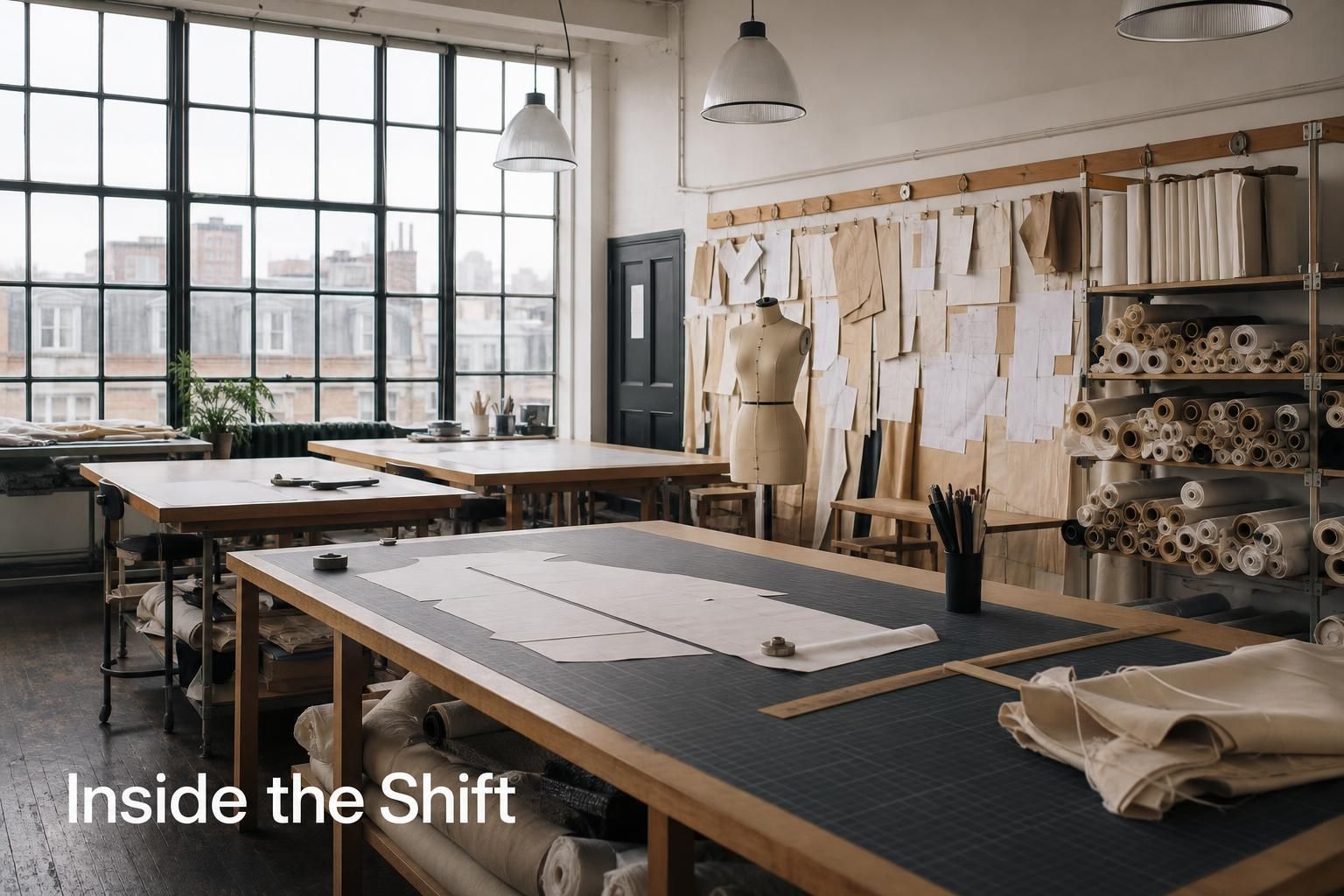
Fashion Portfolio Course: Prepare a Strong Application Portfolio
Quick Answer
A fashion portfolio course helps applicants build a clear, creative, and well-presented body of work for fashion school or a creative course application. It shows how you think, research, sketch, test ideas, and refine outcomes, rather than only presenting finished pieces.
A strong application is rarely just about finished drawings. In a fashion portfolio course, you learn how to show your thinking, your process, and your potential as a designer. That matters because tutors want to see how you research, develop ideas, test materials, and present work with clarity. If you are applying to a foundation, degree, or short course, the portfolio is often the first real conversation you have with a school. It tells them how you observe the world and how you turn ideas into fashion. At JCA London Fashion Academy, applicants can also use pre-application guidance and practice-led short study to shape a stronger submission before applying. In this guide, you will learn what a fashion portfolio course covers, what fashion schools actually look for, what to include, and how to avoid the mistakes that weaken an application.
What Is a Fashion Portfolio Course?
A fashion portfolio course is a structured class that teaches you how to plan, build, and present work for fashion school applications. It usually focuses on research, drawing, concept development, experimentation, and final layout, so your portfolio feels intentional rather than rushed.
In practical terms, a good fashion portfolio course helps you turn loose ideas into a coherent story. That story may include fashion illustration, collage, material samples, garment studies, observational drawing, trend research, or outcome pages. The goal is not to copy one “perfect” style. The goal is to show originality, curiosity, and progression.
This is why many applicants benefit from guided study before sending applications. A focused short course can help you spot gaps in your work and strengthen presentation. JCA’s Short Courses and short fashion courses in London are useful if you want a practical, creative route into portfolio making without committing to a full programme straight away.
If you want to compare different styles of portfolio teaching, it can also help to study outside perspectives. For example, this practical guide from How to Make a Fashion Design Portfolio: A Beginner's Guide breaks down the building blocks in a clear way. Likewise, a portfolio-focused class such as Portfolio Development Short Course shows how seriously institutions treat visual development and presentation.
A strong fashion portfolio course does more than improve pages. It helps you understand what admissions tutors are trying to evaluate: creative potential, technical promise, and the ability to think like a designer.
What Fashion Schools Look for in a Fashion Portfolio Course Submission
Fashion schools want evidence of how you think, not just what you can copy. A strong submission shows research, experimentation, and clear development from first idea to final outcome.
When tutors review a portfolio, they usually look for three things: your visual curiosity, your technical control, and your ability to explain ideas through pages. That means a fashion portfolio course should teach you to document the journey, not only the result. A sketch on its own is rarely enough. A sequence that shows exploration is far more persuasive.
This is also why the best portfolios feel edited. They include enough material to prove range, but not so much that the message becomes confusing. A clear portfolio reads like a short creative narrative. It opens with research, moves through experiments, and ends with resolved work. That structure makes it easier for tutors to understand your strengths quickly.
If you want a real-world visual reference, this walkthrough from Fashion Portfolio Guidance Session | Virtual Thursday ... is useful because it reflects the kind of advice applicants often need before submitting. You can also watch the practical explanation below to see how accepted work is presented in context.
A fashion portfolio course should therefore train you to answer the same question on every page: why is this here, and what does it prove about me as a designer?
Final Outcomes and Presentation
Final outcomes show that you can resolve an idea. They are the pages that make your concept believable as fashion.
In a fashion portfolio course, final pages should be clean, edited, and easy to read. Include finished illustrations, garment flats, styled looks, or photographed outcomes if you have them. However, do not let presentation overpower the work itself. The best portfolios balance clarity with personality.
A polished layout matters too. Consistent typography, logical sequencing, and good image quality all support the work. If you want to understand presentation standards in a fashion setting, browse fashion design courses in London and related admissions routes. These pages help you see how portfolio preparation connects to study pathways.
What to Include in Your Fashion Portfolio Course Work
A good fashion portfolio course teaches you to include work that proves potential, range, and process. It should not be filled with random pages just to make it look full.
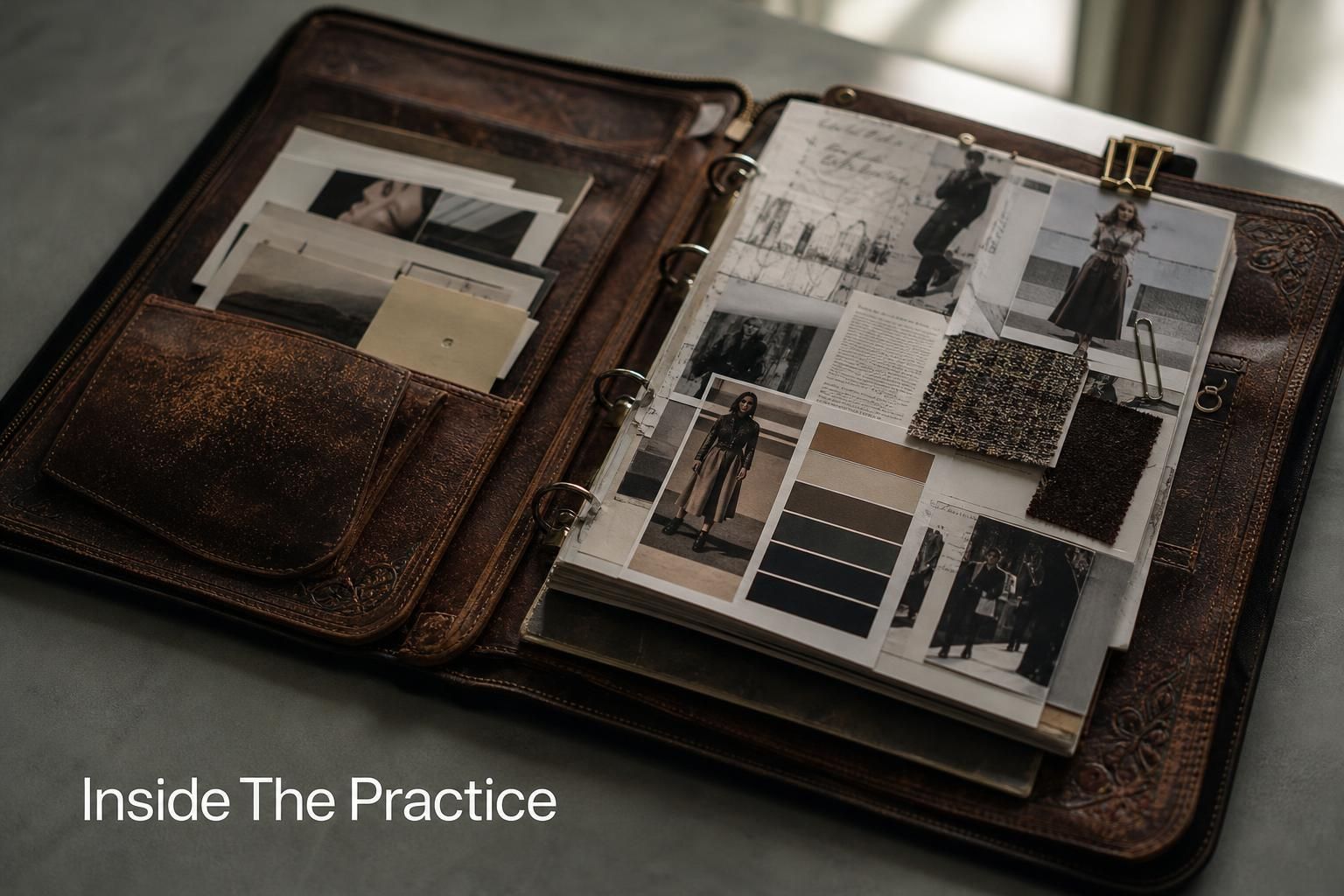
Start with your strongest creative material. That may include observational drawings, fashion figures, silhouette studies, collage, sketchbook pages, textile experiments, or garment development. Then add work that shows progression. For example, one theme can move from research to sketching to fabric exploration to final design. That sequence helps tutors see how you work.
You should also include pages that show your personality. If you are inspired by luxury fashion, tailoring, accessories, or brand storytelling, make that clear through your choices. If you are more interested in fashion entrepreneurship, visual communication, or commercial concepts, your portfolio can still reflect that direction. The important thing is consistency.
If you want another practical route into making work, JCA’s fashion design classes in London can support beginners and applicants who need more guided practice. Meanwhile, those exploring wider entry routes can review full time courses to understand how different programmes build from portfolio preparation into longer study.
Use this simple checklist when deciding what to include:
- Research pages that show a clear theme
- Sketchbook development with annotations
- Drawing studies from observation or imagination
- Fabric, texture, and material tests
- Colour development or palette decisions
- Garment, accessory, or styling exploration
- Final pages that show outcomes clearly
A fashion portfolio course should leave you with work that looks edited, not overloaded. That is what makes the portfolio feel mature.
Common Fashion Portfolio Course Mistakes to Avoid
The most common mistake is showing only final pieces. A portfolio without process gives tutors too little evidence of how you think.
Another problem is inconsistent quality. Many applicants include every page they have, even when some pages weaken the overall standard. A fashion portfolio course should teach you to edit ruthlessly. Strong curation makes the best work stand out.
A third issue is weak context. If pages appear disconnected, the portfolio loses momentum. Use headings, notes, or sequencing to guide the reader. A clear story is easier to remember than a collection of unrelated images.
Some applicants also overdesign their pages. Decorative layouts can distract from the work. Simplicity often works better. Let the concept carry the page.
Finally, avoid copying trends without reflection. Fashion schools are not looking for replicas of popular styles. They want personal thinking, practical exploration, and a willingness to learn. If you need help identifying these issues early, a guided fashion portfolio course can save time and reduce stress before you apply.
How JCA Supports Portfolio Preparation in a Fashion Portfolio Course
JCA supports portfolio preparation by combining creative teaching with practical next steps. That means applicants can move from uncertainty to a clearer application plan.
A fashion portfolio course at or alongside JCA study can help you sharpen ideas, improve presentation, and understand how admissions expectations work in practice. This is especially useful if you are applying as a school leaver, a career changer, or an international student building a UK-standard portfolio.
JCA also offers routes that connect portfolio building to wider study choices. If you are still exploring your options, start with JCA | London Fashion Academy – Shaping the Future of Fashion Design & Entrepreneurs and then move into the Pre Application Form when you are ready for personalised guidance. That makes the process more focused.
For learners who prefer a shorter, flexible route, JCA’s creative study options can give you momentum before a bigger application. The academy’s practice-led environment is particularly helpful for applicants who need reassurance about what to show, how to sequence it, and how to speak about their work. That is often the missing piece in a fashion portfolio course.
If you want to see how creative pathways connect to fashion education and brand thinking, explore the fashion communication course and the fashion entrepreneurship course. They can help you understand how portfolio work links to broader creative ambition.
Portfolio Course vs Foundation Diploma: Which Path Should You Choose?
A fashion portfolio course is usually the faster, more focused option. A foundation diploma is broader and is designed to build your skills across a longer study period.
Choose a fashion portfolio course if you need direct application support, clearer presentation, or a stronger body of work before applying. It is ideal when your main goal is to improve a submission in a short timeframe.
Choose a foundation diploma if you want more time to explore, test, and build confidence across multiple creative areas. It can be the better route if you are still deciding on your specialism or need a wider base before progressing to degree study.
The best option depends on your current stage. If your work is already developing well, a fashion portfolio course may be enough. If you need deeper technical growth, a longer route may suit you better. For many applicants, the answer is not one or the other. A short course can come first, followed by a longer pathway once the portfolio feels ready.
To see how study options connect, review full time courses alongside short courses. That comparison often makes the next step much clearer.
Key Takeaways
- A fashion portfolio course should teach process, not just finished outcomes.
- Tutors look for research, development, experimentation, and clear presentation.
- Your portfolio should be edited, coherent, and personal to your creative direction.
- JCA supports applicants through short study, pre-application guidance, and connected course pathways.
- A short fashion portfolio course can be the right first step before a foundation or full-time programme.
Frequently Asked Questions
What should I put in a fashion portfolio?
Include work that shows your ideas, process, and development. A strong fashion portfolio usually has research pages, sketchbook work, drawing studies, fabric experiments, design development, and clear final outcomes. The key is to show how you think, not just what you finished.
Do I need finished garments in a fashion portfolio course portfolio?
No, not always. Finished garments can help, but they are not essential for every applicant. Many schools care more about creative process, visual thinking, and potential, so a portfolio with strong research and development can still be effective.
How many pages should a fashion portfolio have?
There is no universal page count. The better question is whether every page adds value. A strong portfolio is edited, relevant, and easy to follow, so include enough work to show range without padding the submission.
Can a fashion portfolio course help if I am a beginner?
Yes. A fashion portfolio course is often the best starting point for beginners because it teaches structure, selection, and presentation. It helps you build confidence and understand what tutors want to see before you apply.
How does JCA help applicants prepare a fashion portfolio?
JCA supports applicants through practical short study, pre-application guidance, and creative courses that build confidence. That combination helps you refine your work, improve your presentation, and choose a study route that fits your goals.